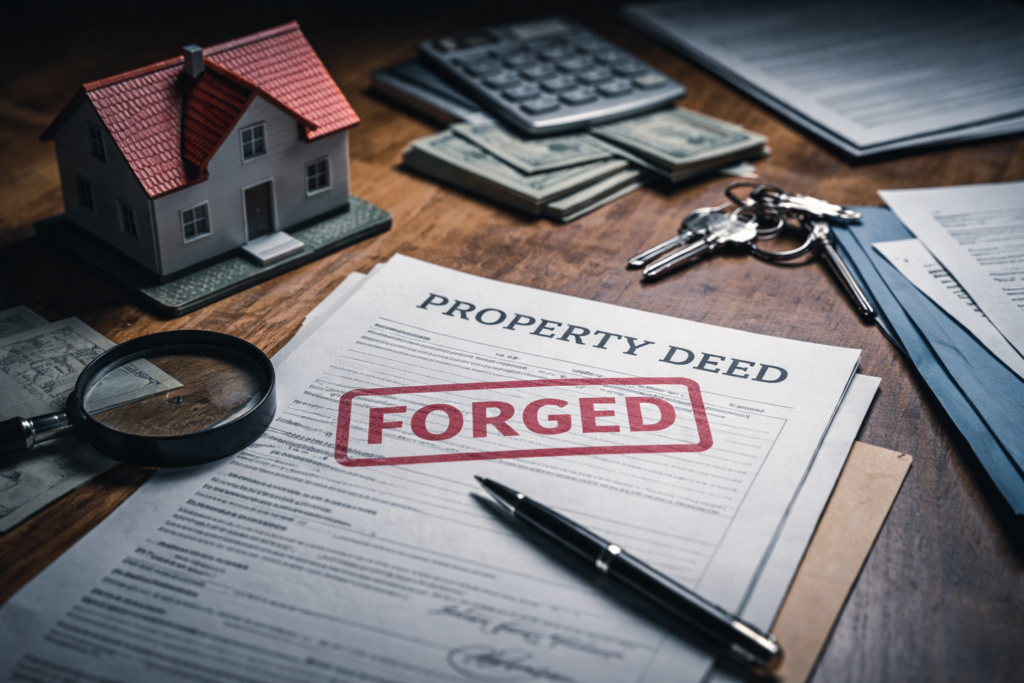
Title theft is a form of real estate fraud in which a criminal unlawfully transfers ownership of a property by manipulating, forging, or fraudulently recording ownership documents. Property ownership is legally established through a title, which reflects the chain of ownership recorded in public land records. When those records are altered without authorization, it can falsely appear that ownership has changed—even though the rightful owner never approved the transfer.
Title theft is sometimes used interchangeably with terms like deed theft, home title theft, or property fraud. While deeds are the documents used to transfer ownership, title theft refers more broadly to the unauthorized disruption of a property’s ownership record, whether through forged deeds, impersonation, or other fraudulent filings.
Because property titles rely on public recording systems, criminals can exploit gaps in identity verification and oversight to carry out this type of fraud.
How Title Theft Occurs
Title theft often begins with identity misuse or document forgery. A criminal may obtain a property owner’s personal information through data breaches, phishing schemes, stolen mail, or publicly accessible records. Using that information, the criminal prepares fraudulent documents—commonly a forged quitclaim deed—that falsely transfers ownership to the thief or an accomplice.
These documents are submitted to a county recorder or clerk’s office. Recording offices typically review filings for formatting and completeness rather than verifying the authenticity of signatures or the intent behind the transaction. As a result, fraudulent documents may be accepted and officially recorded.
Once recorded, the criminal may attempt to sell the property, secure loans against it, or place liens on it. In some cases, ownership is transferred multiple times to complicate the trail and make the fraud more difficult to reverse.
Why Title Theft Is Difficult to Detect
Title theft does not involve physical access to the property. There are often no immediate warning signs that ownership has been compromised. Property owners may continue living in or managing the property without realizing that the title has been altered.
Many owners discover title theft only when:
- Attempting to sell or refinance
- Applying for a loan or line of credit
- Receiving notices for unfamiliar liens or debts
- Being contacted by someone claiming an ownership interest
Because public recording systems do not automatically notify owners of changes, fraudulent activity can remain undetected for long periods.
Properties Most at Risk
Although any property can be targeted, certain situations increase vulnerability:
- Properties owned outright with no mortgage
- Rental or investment properties
- Vacant or seasonal properties
- Properties owned by elderly individuals
- Properties involved in probate or inheritance transitions
Criminals often look for properties that appear unmonitored or administratively inactive.
Consequences of Title Theft
The consequences of title theft can be severe and long-lasting. Property owners may face legal action to restore rightful ownership, delays or cancellations of sales or refinances, unauthorized loans or liens, and potential credit complications. Resolving title theft often requires coordination with attorneys, title companies, lenders, and county offices, and the process can be costly, time-consuming, and stressful.
Common Misconceptions About Title Theft
One common misconception is that title theft is rare. In reality, it has become more common as property records move online and real estate transactions increasingly occur remotely.
Another misconception is that title insurance alone prevents title theft. While title insurance can help address certain losses or historical defects, it does not stop fraudulent filings from occurring or ensure immediate detection of unauthorized changes.
The Role of Organization and Monitoring
Responding effectively to title theft depends heavily on awareness and documentation. Having organized access to deeds, closing documents, loan records, and prior title reports makes it easier to determine whether a recorded change is legitimate and to act quickly if it is not.
Platforms like DomiDocs® support this process by centralizing important property records and ownership documents in one secure location. Its HomeLock™ service adds an additional layer of awareness by monitoring public records tied to a property’s title, helping homeowners notice unusual or unauthorized activity earlier. This combination of organization and monitoring can reduce confusion and help homeowners respond with clarity rather than urgency if questions about ownership arise.
Why Awareness Matters
Title theft is a paperwork crime, but its consequences are very real. Awareness helps property owners recognize risk factors, stay organized, and respond quickly if something seems wrong. Understanding how title theft works is an important step in protecting ownership rights and long-term financial security.
Understanding terms like this is one piece of a much larger homeownership picture. Keeping important records, loan documents, and property information organized can make every stage of buying, owning, or selling a house less stressful and more transparent. Platforms like DomiDocs® help homeowners securely store and manage these critical documents in one place, while HomeLock™ adds an extra layer of awareness around changes that may affect property ownership. Together, they support informed decisions and long-term peace of mind throughout the homeownership journey. For broader context on real estate–related scams and financial crime trends, homeowners can also reference guidance and public resources from the Federal Bureau of Investigation (FBI).