What is the Fraud Triangle?
The fraud triangle is a widely used model for understanding why fraud happens: it suggests fraud risk increases when pressure, opportunity, and rationalization overlap.
The latest news, tips, and tricks for homeowners
The fraud triangle is a widely used model for understanding why fraud happens: it suggests fraud risk increases when pressure, opportunity, and rationalization overlap.
Learn the 4 P’s of spotting fraud: pretend, problem, pressure, and pay, plus practical ways homeowners can reduce risk and avoid common scams.
The 10-80-10 rule is a behavioral framework suggesting that a small minority will commit fraud whenever possible, most people are situational, and a small group will remain honest regardless of opportunity.
Learn whether a home title can be stolen when a property is held in a trust, how deed fraud works, what changes with trust ownership, and practical ways to reduce risk and detect suspicious filings early.
To protect land property from fraud, combine public-record monitoring (county/recorder alerts and periodic record checks), strong identity and document security, and a clear response plan for suspicious filings—then consider reputable title-related protections (like title insurance) and property-focused monitoring/assistance services (like HomeLock) based on your risk profile, especially for vacant land or out-of-state ownership.
To protect your property from fraud, monitor your county land records for unexpected deed or lien filings, lock down identity and mail pathways criminals use to impersonate owners, keep ownership documents organized, and act fast with your recorder’s office, law enforcement, and a real estate attorney if you spot suspicious activity.
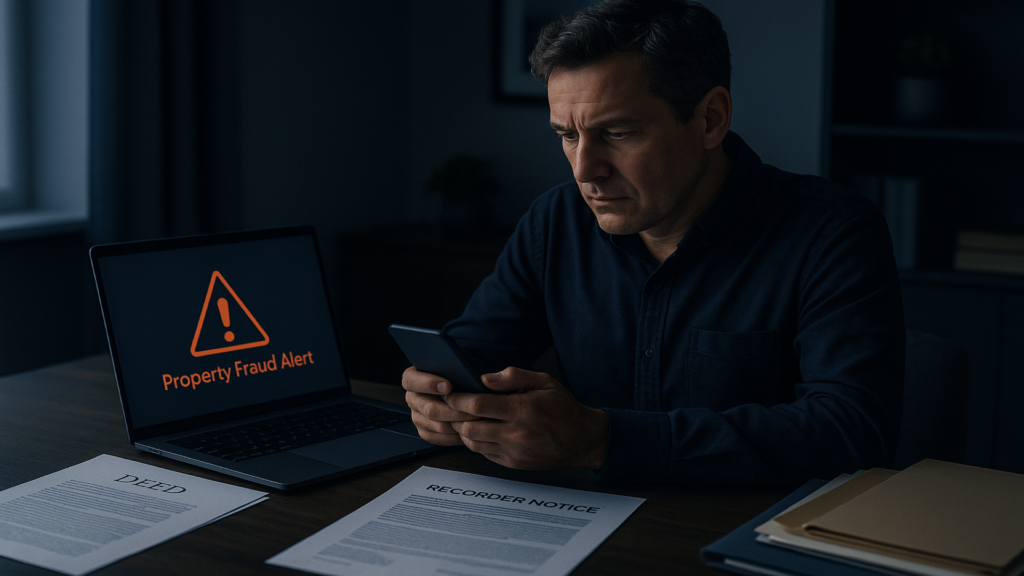
A practical, experience-driven look at how home title fraud actually starts, why traditional protections fall short, and what real prevention looks like in today’s digital property landscape.
Home title lock services generally focus on monitoring public property records for changes tied to a homeowner’s address or parcel number. These services aim to notify homeowners if new filings, liens, or ownership-related documents appear in county records. The core idea is early awareness rather than direct prevention.
Title Lock is not inherently a waste of money, but its value depends on what a homeowner expects. If someone assumes it prevents title theft or replaces title insurance, it may feel overpriced. If the goal is basic monitoring alerts, it can provide limited awareness
Whether a home title monitoring service is worthwhile depends on factors such as property value, ownership complexity, and a homeowner’s ability to routinely review public records. The FTC advises consumers to evaluate fraud-related services based on transparency, scope of monitoring, and clarity of limitations before purchasing.