

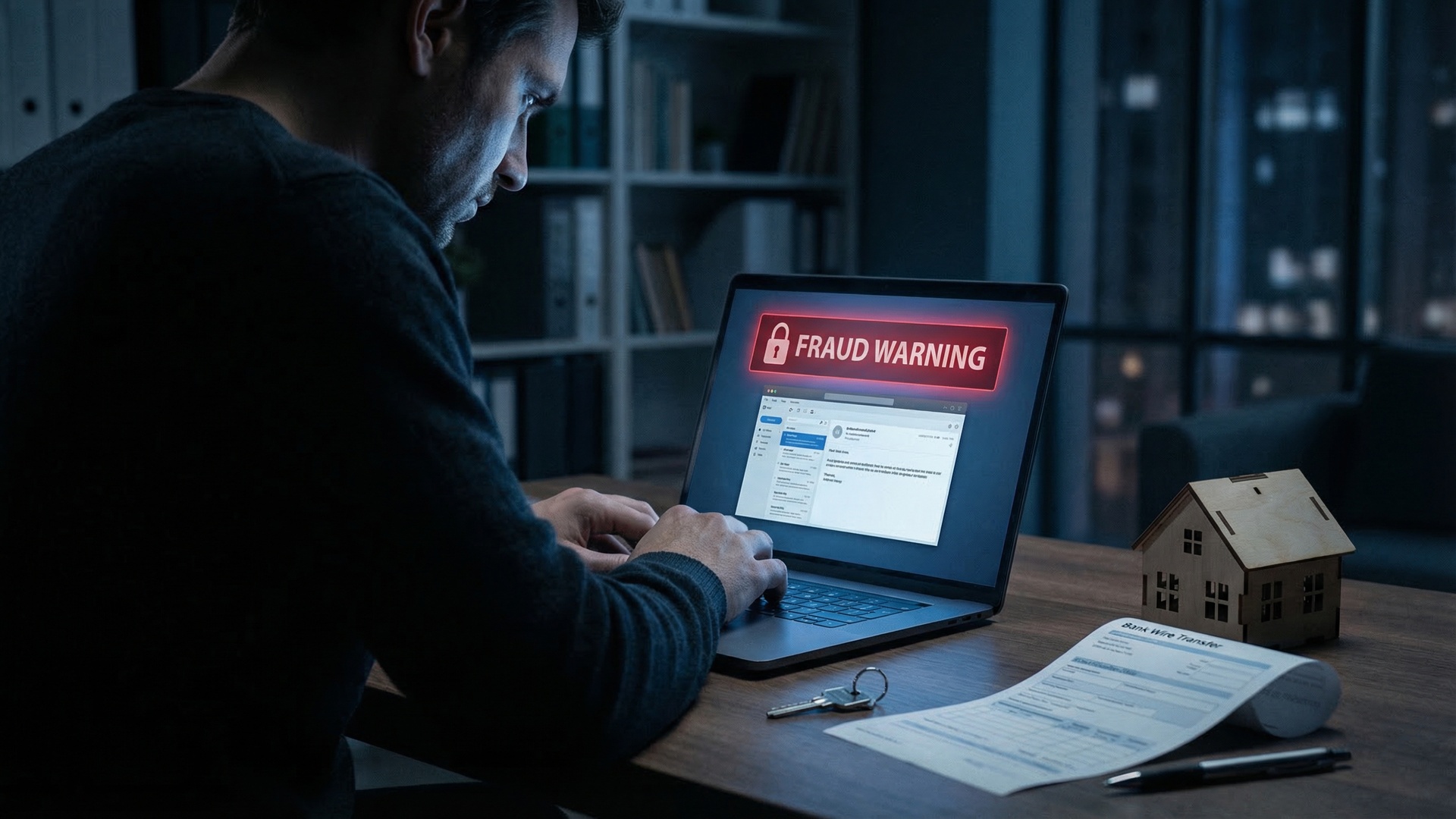
What Is Real Estate Wire Fraud?
Real estate wire fraud is a high-stakes cybercrime where criminals trick homebuyers, sellers, and real estate professionals into wiring money to fraudulent accounts — often resulting in the complete, unrecoverable loss of closing funds. The FBI consistently ranks it as the most financially damaging cybercrime in the United States.
Table of contents
Real estate wire fraud is a sophisticated scam that targets parties in real estate transactions — homebuyers, sellers, real estate agents, title companies, and attorneys — by tricking them into sending closing funds to accounts controlled by criminals. Using a combination of business email compromise (BEC), phishing, and social engineering, scammers impersonate trusted parties in the transaction. Once the money is wired to the fraudulent account, it is quickly transferred to other accounts, often overseas, making recovery extremely difficult.
According to the FBI's 2023 Internet Crime Report, the Internet Crime Complaint Center (IC3) received 11,677 complaints related to real estate wire fraud in 2023, with total losses exceeding $446 million. That figure represents only reported losses — the actual total is believed to be significantly higher, as many victims do not report the crime.
How Real Estate Wire Fraud Works: A Step-by-Step Breakdown
Wire fraud in real estate follows a predictable pattern, though the execution becomes more sophisticated each year. Understanding the mechanics is the first step toward protecting yourself.
- Reconnaissance: Scammers monitor public real estate listings and, in many cases, hack into the email accounts of real estate agents, title companies, or attorneys to gather detailed information about upcoming transactions — including closing dates, amounts, and the identities of all parties involved.
- Impersonation: Using the stolen information, criminals create spoofed email addresses and lookalike domains that appear nearly identical to the legitimate ones. A common tactic is to add a single character or swap a letter (for example, "titlecompany-llc.com" instead of "titlecompany.com").
- Fraudulent Instructions: Just before the closing date, the scammer sends an email to the homebuyer with fraudulent wiring instructions, directing them to send closing funds to an account they control. These emails frequently manufacture urgency, claiming there has been a last-minute change in bank accounts due to a security issue or audit.
- Theft and Dispersal: The unsuspecting buyer wires the funds. Within minutes, the criminals transfer the money to a series of other accounts — often in multiple countries — making it nearly impossible to trace or recover.
Important
Wire transfers are not like credit card payments. Once a wire is sent and the funds are moved, there is no chargeback mechanism. Speed is the only factor that can lead to a successful wire recall — which is why immediate action is critical if you suspect fraud.
Who Is Most at Risk for Real Estate Wire Fraud?
While any party in a real estate transaction can be targeted, certain groups face elevated risk. According to a 2025 report by CertifID, first-time homebuyers are three times more likely to fall victim to wire fraud than experienced buyers. This is largely because they are unfamiliar with the closing process and may not know what legitimate wiring instructions look like or how they are typically communicated.
Beyond first-time buyers, properties with high equity, vacant properties, and transactions involving multiple parties across different time zones are also frequently targeted. Scammers look for transactions where communication is primarily conducted over email and where there is limited opportunity for in-person verification.
Red Flags of Real Estate Wire Fraud
Recognizing the warning signs of wire fraud before you act is the most effective defense. The following red flags should prompt immediate verification before any funds are transferred:
- Last-minute changes to wiring instructions. Legitimate title companies rarely change wire instructions at the eleventh hour. Any change should be treated as suspicious until verbally confirmed.
- Urgency and pressure. Emails that create a sense of emergency — "You must wire today or the closing will be delayed" — are a hallmark of social engineering.
- Subtle email address discrepancies. Look closely at the sender's email address. Scammers often use domains that differ by one character from the legitimate address.
- Grammatical errors or unusual formatting. While sophisticated scammers have improved their writing quality, errors in tone, grammar, or formatting can still be a tell.
- Requests to wire to a different person or institution. If the payee name or bank differs from what you were originally told, stop and verify immediately.
How to Prevent Real Estate Wire Fraud
Prevention requires a combination of vigilance, verification, and secure communication practices. The following steps can significantly reduce your risk:
- Verify wiring instructions by phone — every time. Before wiring any amount, call your title company or real estate attorney using a phone number you obtained independently (not from the email containing the instructions). Confirm every digit of the routing and account numbers verbally.
- Treat all last-minute changes as fraudulent until proven otherwise. Do not act on any change to wiring instructions received via email without a verbal confirmation call.
- Use secure, encrypted communication platforms. Avoid discussing sensitive financial information over standard email. Many title companies now use secure transaction portals specifically to reduce wire fraud risk.
- Enable multi-factor authentication (MFA) on all email accounts. If your real estate agent's or attorney's email is compromised, MFA can prevent unauthorized access that enables the scam.
- Ask your title company about their fraud prevention protocols. Reputable title companies have procedures in place to verify identity before providing wiring instructions and will never send them via unsecured email.
- Monitor your property records continuously. Wire fraud is often the second step after a scammer has already gathered intelligence about your property. HomeLock™ by DomiDocs® provides continuous property monitoring and multi-channel alerts that can surface suspicious activity before it escalates to a financial loss.
What to Do if You Are a Victim of Real Estate Wire Fraud
If you suspect you have been a victim of wire fraud, time is the single most critical factor. The faster you act, the greater the chance of a successful wire recall. Take the following steps immediately:
- Call your bank immediately. Request an emergency wire recall. Provide the receiving bank's name, account number, and routing number. Ask to speak with the fraud department directly.
- File a complaint with the FBI's IC3. Report the fraud at www.ic3.gov. The IC3 works with financial institutions and law enforcement to attempt fund recovery.
- Contact your local law enforcement. File a police report with your local police or sheriff's department. This creates an official record that may be required by your bank and insurance company.
- Notify all parties in the transaction. Inform your real estate agent, title company, and attorney immediately so they can alert their own institutions and prevent further fraudulent activity.
- Contact the receiving bank directly. Your bank can initiate a recall, but contacting the receiving bank directly — through official channels — may accelerate the process.
How HomeLock™ Fits Into Your Protection Plan
While wire fraud prevention primarily relies on vigilance during the transaction process, continuous property monitoring plays an important supporting role. Scammers who target homeowners for wire fraud often begin by researching the property, its equity position, and the identities of the parties involved. HomeLock™ by DomiDocs® monitors your property records for unauthorized activity, changes to deed records, and other early indicators of fraud — providing an additional layer of awareness that can alert you before a scammer has gathered enough information to execute a wire fraud scheme.
For homeowners who want to understand the full spectrum of property fraud risks — including deed theft, lien fraud, and seller impersonation — the DomiDocs Real Estate Fraud resource center provides comprehensive guidance on protecting your most valuable asset.
Frequently Asked Questions
How common is real estate wire fraud?
Real estate wire fraud is one of the most prevalent and financially damaging cybercrimes in the United States. The FBI's IC3 received 11,677 complaints related to real estate wire fraud in 2023, with reported losses exceeding $446 million. Research by CertifID found that more than 1 in 4 parties in a real estate transaction are targeted by fraud attempts, and nearly 1 in 20 become victims.
Who is most at risk for real estate wire fraud?
First-time homebuyers are three times more likely to fall victim to wire fraud than experienced buyers, according to CertifID's 2025 State of Wire Fraud Report. Sellers of vacant properties, high-equity homes, and properties in high-value markets are also frequently targeted. Anyone who relies primarily on email for transaction communication is at elevated risk.
Does title insurance protect against wire fraud?
Standard owner's title insurance policies are designed to protect against defects in title that existed before you purchased the property — not against wire fraud losses that occur during the closing process. Some insurers offer endorsements or separate cyber-fraud policies that may provide coverage. Review your policy carefully and consult your insurance agent about your specific coverage options.
Can you recover money lost to real estate wire fraud?
Recovery is possible but not guaranteed, and speed is the decisive factor. If you contact your bank within hours of the fraudulent transfer, a wire recall may succeed before the funds are dispersed. The FBI's IC3 Financial Fraud Kill Chain (FFKC) program has recovered hundreds of millions of dollars for victims, but it requires immediate reporting. The longer you wait, the lower the probability of recovery.
What is business email compromise (BEC) in real estate?
Business email compromise (BEC) is the most common method used to execute real estate wire fraud. In a BEC attack, criminals gain access to — or convincingly spoof — the email account of a trusted party in the transaction, such as a real estate agent, title company, or attorney. They then use that access to monitor the transaction and send fraudulent wiring instructions at the optimal moment, typically just before closing.
Sources
- Federal Bureau of Investigation, Internet Crime Complaint Center (IC3). (2024). 2023 Internet Crime Report. https://www.ic3.gov/Media/PDF/AnnualReport/2023_IC3Report.pdf
- CertifID. (2025). 2025 State of Wire Fraud Report. https://www.certifid.com/article/2026-state-of-wire-fraud-report