

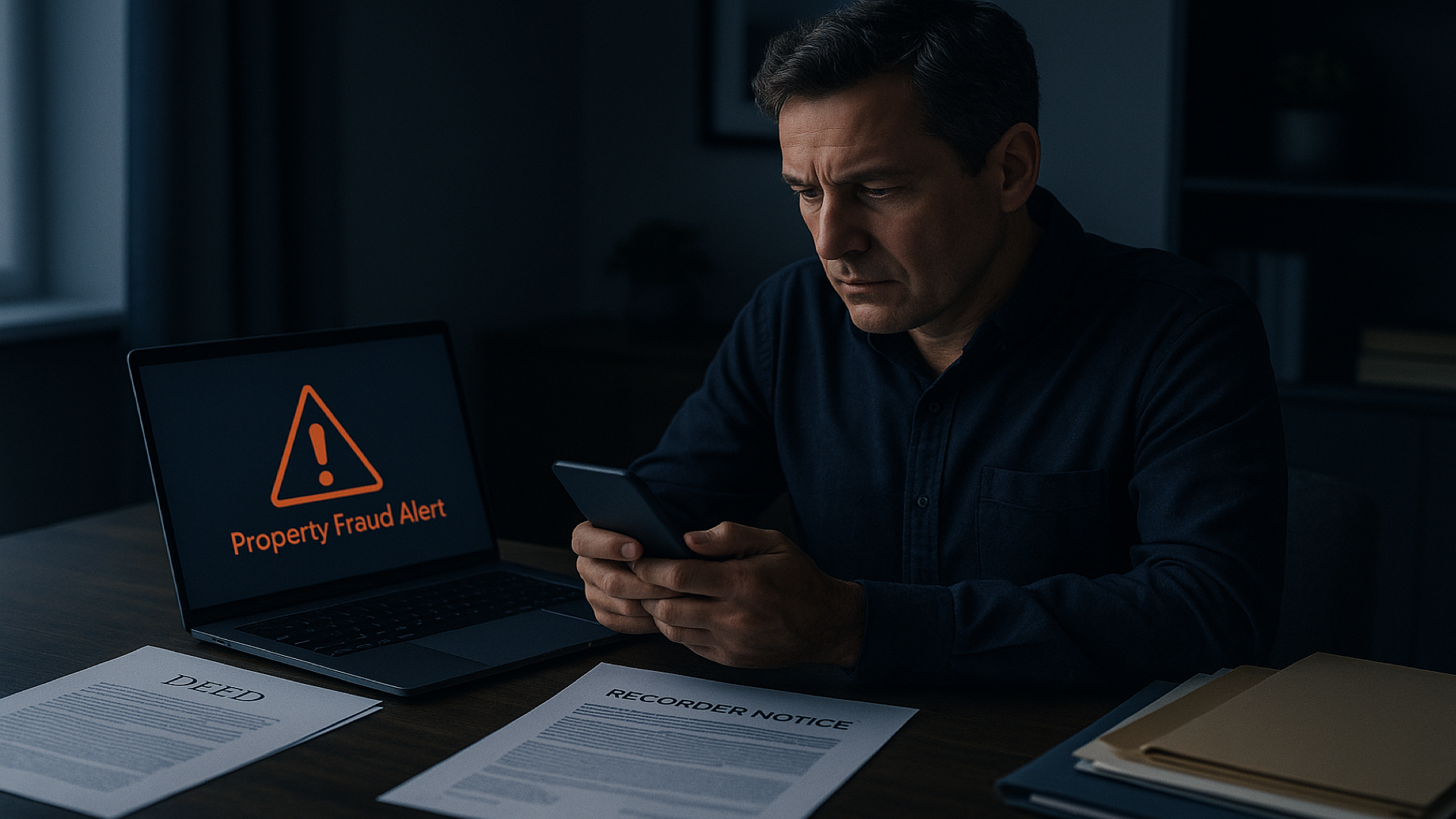
A property fraud alert does not stop fraud. It does not lock your title, block a recording, or prevent someone from filing paperwork against your property. What it does is notify you after a monitored filing is detected so you can act faster. For homeowners, that difference matters.
In plain terms, a property fraud alert is an early-warning tool. Some counties offer free name-based alert programs through the recorder or county clerk. Some private services offer broader monitoring and support. Either way, the basic function is the same: watch for recorded documents tied to your name, property, or parcel, and alert you when something appears. The alert itself is not the protection. Your response time, documentation, and layered safeguards are what matter next.
What Is a Property Fraud Alert?
A property fraud alert is a notification service that watches public land records for certain ownership-related filings and sends you a notice when a matching document is recorded. Depending on the county or service, those alerts may be triggered by:
- your exact name appearing as a grantor or grantee
- a deed, lien, mortgage, or similar document being recorded
- a property address or parcel number tied to a monitored record
- email, phone, or text delivery preferences selected by the homeowner
Many county programs are free, which makes them worth checking. But free does not mean comprehensive. Some systems are name-based only. Some may not catch every variation, trust name, LLC name, or filing pattern you care about. Some only notify after the document is already accepted into the county record.
What a Property Fraud Alert Does
Faster awareness
An alert can tell you about a suspicious deed, lien, or ownership-related filing sooner than waiting for tax notices, lender mail, or a surprise during a refinance or sale.
Better documentation
Early notice gives you a better chance to preserve copies of recorded documents, compare names and legal descriptions, and start building your response file.
Quicker escalation
If something looks wrong, you can contact the county recorder, legal counsel, and identity-theft resources sooner instead of discovering the problem much later.
That is valuable. In title-related fraud, speed matters. The sooner you spot a false deed, fraudulent lien, or unauthorized mortgage filing, the easier it may be to document the issue and begin correcting the record.
What a Property Fraud Alert Does Not Do
This is the part many homeowners misunderstand. A property fraud alert does not:
- prevent a criminal from attempting to file paperwork
- stop a county office from recording a document automatically
- freeze your title or “lock” ownership in place
- replace title insurance or legal counsel
- fix a fraudulent filing for you after the fact
That last point is especially important. An alert is only a signal. If the monitored event has already happened, the next steps still depend on you. You may need to gather ownership records, contact the county, file police reports, notify lenders, freeze credit, or work with an attorney to clear a cloud on title.
How County Property Fraud Alerts Usually Work
County-based programs are often run through the recorder, county clerk, register of deeds, or a third-party system connected to the local recording office. A homeowner typically signs up with one or more names, then receives a notification if a matching document is recorded in the official public record.
That model is useful, but it has built-in limits:
Name matching can be imperfect
If your property is held in a trust, LLC, or under a variation of your legal name, you may need multiple registrations.
The alert is post-filing
You are notified after a monitored document is detected, not before an attempt is made.
Coverage varies by county
Some jurisdictions provide strong public tools; others offer limited or no alerting at all.
Fraud is broader than one filing
Identity theft, forged notarizations, seller impersonation, and loan fraud can overlap with title-related risk.
That is why county alerts are best understood as one layer in a broader response plan, not a complete shield.
Are Free County Alerts Worth Using?
Yes—usually. If your county offers a free property fraud alert, signing up is generally a practical step because the cost is low and the upside is real. But the right expectation is this: worth using does not mean fully protective.
A free county alert can be a smart first layer if you want basic notification when a filing hits public record. For many homeowners, that is far better than having no monitoring at all. Still, you should avoid the false comfort that an alert means your property cannot be targeted. It can. The service just improves the odds that you will know sooner.
Who Should Care Most About Property Fraud Alerts?
Any homeowner can benefit from faster notice, but the need is higher if you own property that is easier to exploit or harder to monitor day to day, such as:
- mortgage-free homes with substantial equity
- vacant or inherited property
- rental or out-of-state property
- homes held in trusts or family entities
- properties owned by older adults who may not monitor records frequently
These scenarios do not guarantee fraud. They simply increase the chance that a suspicious filing could sit unnoticed longer if nobody is watching the public record.
Property Fraud Alert vs. Property Fraud Protection
A property fraud alert is a notification mechanism. A broader protection strategy may include:
- county alert enrollment
- regular review of property and tax records
- secure storage of deeds, title policies, and payoff records in DomiDocs
- identity theft precautions such as credit freezes
- title insurance where appropriate
- ongoing monitoring and support tools designed for homeowners
What Should You Do After a Property Fraud Alert?
If you receive an alert, do not panic—but do move quickly. The first goal is to confirm what was recorded and whether it is legitimate.
- Pull the recorded document from the county system and save a copy.
- Compare the names, signatures, legal description, and recording details.
- Check whether the filing is expected, such as a payoff release or known lien.
- Contact the county recorder or clerk to ask about correction procedures.
- Speak with a qualified real estate attorney if the filing appears unauthorized.
- Report related identity theft or cybercrime concerns through the FBI IC3 or FTC fraud reporting portal when appropriate.
- Review your credit and freeze it if identity misuse may be involved.
The exact path depends on state law and the type of filing. But the common principle is the same: an alert is useful because it shortens the time between the event and your response.
How DomiDocs Fits In
DomiDocs helps homeowners keep critical ownership and home records organized, accessible, and easier to verify when something looks wrong. That matters in fraud response because speed without documentation is not enough. If you need to prove ownership, locate title insurance paperwork, confirm mortgage payoff records, or share documents with counsel, having your records in one place can reduce friction when every day counts.
For homeowners concerned about title-related risk, the smarter mindset is not “What single product will protect everything?” It is “What layered system helps me detect issues early, confirm facts quickly, and respond with the right records?” Property fraud alerts can absolutely play a role in that system. They just should not be mistaken for protection by themselves.
Bottom Line
Frequently Asked Questions
Does a property fraud alert prevent deed fraud?
No. A property fraud alert does not prevent deed fraud or block a filing. It only notifies you after a monitored filing is detected.
Is a county property fraud alert enough by itself?
Usually no. County alerts are useful, but they are only one layer. Homeowners still need good records, periodic checks, and a response plan if something suspicious appears.
What happens after I receive a property fraud alert?
You should review the recorded document, confirm whether it is legitimate, and contact the county recorder, an attorney, law enforcement, or identity-theft resources if the filing appears fraudulent.
Can a property fraud alert replace title insurance?
No. Title insurance and fraud alerts serve different purposes. An alert is a notification tool, while title insurance addresses certain title-related risks and claims under the policy terms.
Who should sign up for a property fraud alert?
Any homeowner can benefit, but it is especially worthwhile for owners of mortgage-free homes, vacant properties, inherited homes, rental properties, and homes held in trusts or entities.
Sources
- Tarrant County Clerk: Property Fraud Alert — county example confirming these alerts are an early-warning tool and do not prevent fraud.
- National Association of REALTORS®: Consumer Guide to Title Fraud — overview of title fraud risks, warning signs, and response steps.
- FBI Internet Crime Complaint Center (IC3) — reporting option when identity misuse or internet-enabled property fraud is involved.
- FTC ReportFraud — consumer fraud reporting portal for related fraud and identity-theft concerns.
Practices vary by county and state. Homeowners should verify local recorder procedures and speak with a qualified attorney when a filing appears unauthorized.