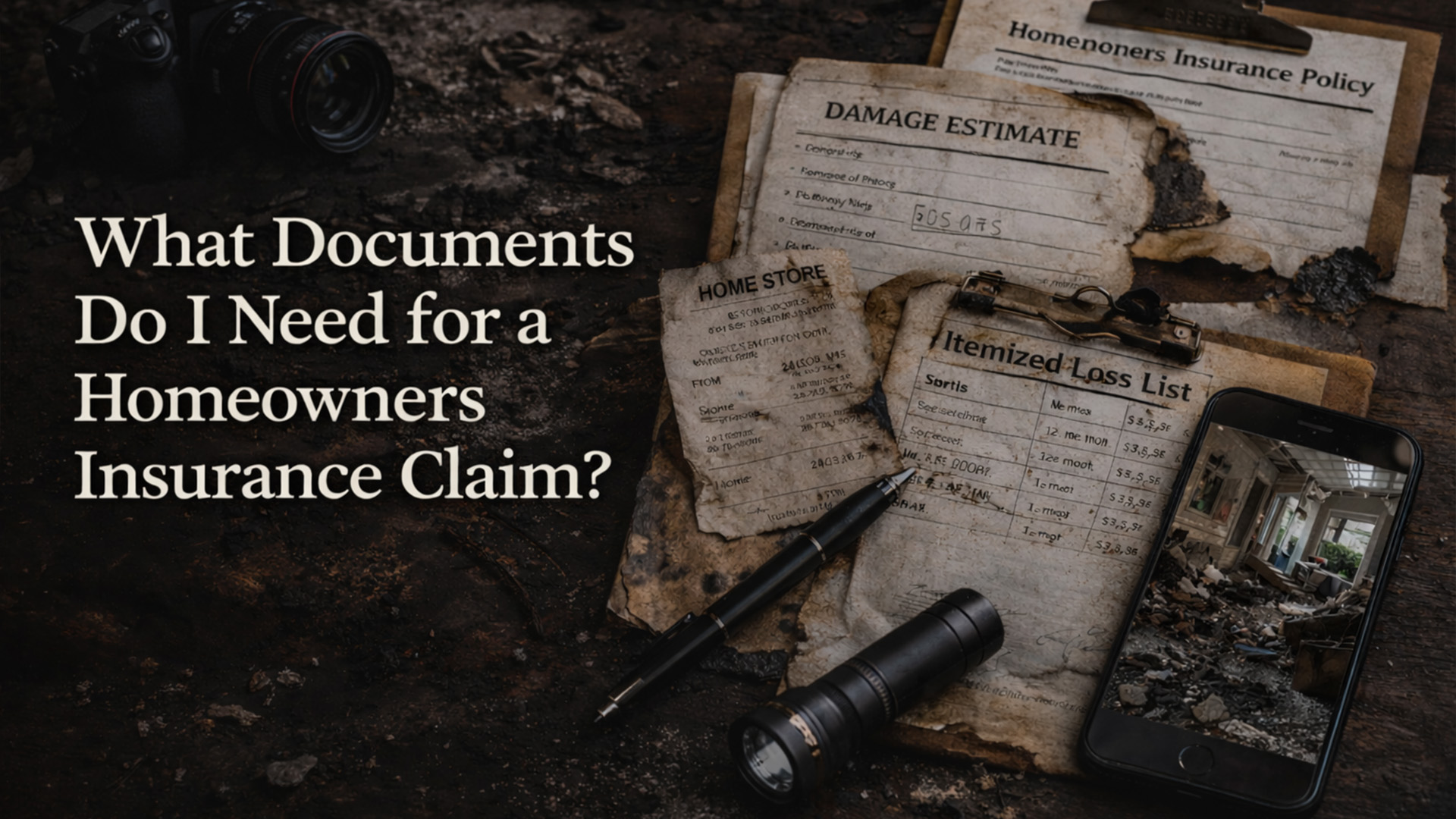
For a homeowners insurance claim, you usually need your policy information, photos or video of the damage, a home inventory or itemized loss list, receipts or proof of ownership, repair estimates, and claim communications. If the loss is severe, you may also need temporary housing receipts, contractor bids, and documents showing what the insurer already paid or denied.
Most homeowners do not lose claims because they forgot one magic form. They lose time, leverage, and payout clarity because the file is incomplete, disorganized, or hard to support. The stronger your documentation, the easier it is to show what was damaged, what it was worth, what repairs cost, and what still remains unresolved.
The Core Documents Most Homeowners Need
Insurance policy details
Your carrier name, policy number, declarations page, and any relevant endorsements or riders.
Damage evidence
Photos and video showing the condition of the property before cleanup, repair, or disposal.
Itemized loss list
A room-by-room inventory of damaged belongings with descriptions, age, estimated value, and replacement details.
Proof of ownership
Receipts, invoices, serial numbers, credit card records, manuals, appraisals, or prior photos of the items.
Repair or rebuild estimates
Contractor quotes, emergency mitigation invoices, and any insurer or adjuster estimates you receive.
Claim correspondence
Emails, letters, adjuster notes, claim summaries, settlement offers, and denial or partial-denial letters.
What to Gather Immediately After the Damage
- Photograph and video the damage before major cleanup, if it is safe to do so.
- Save emergency mitigation invoices for tarping, water extraction, board-up work, or temporary repairs.
- Write down the date of loss, what happened, and which rooms or systems were affected.
- Start a room-by-room damaged property list while the details are still fresh.
- Collect policy paperwork, prior home inventory records, and proof of ownership for high-value items.
- Track every conversation with the carrier, adjuster, contractors, and restoration vendors.
That first evidence pass matters. Once debris is removed or repairs begin, it becomes harder to prove original condition and scope. This is one reason DomiDocs emphasizes documentation before and after disasters rather than only after the claim is already contested.
The Most Important Supporting Records
1. Your declarations page and policy documents
You need the policy itself, not just the insurer name. Your declarations page helps confirm limits, deductibles, and policy periods. Endorsements and riders matter too, especially for jewelry, electronics, water backup, scheduled property, or additional living expenses.
2. Photos and video of damage
Document the full scene first, then zoom into specific damage. Capture structural issues, contents damage, appliance model tags, soot, water lines, roof impacts, or anything that shows severity and spread. If you already had pre-loss inventory photos, those can be extremely helpful.
3. Itemized contents inventory
Insurers often need more than “bedroom damaged.” They may require descriptions, approximate age, original purchase price, and replacement cost details. A good inventory can materially improve how fast and accurately contents are evaluated.
4. Receipts, appraisals, and proof of ownership
Not every item will have a receipt, but any proof helps: receipts, credit card statements, appraisals, product registrations, serial numbers, owner manuals, retailer order confirmations, or dated photos showing the item in your home.
5. Repair estimates and invoices
Emergency repair bills, mitigation work, mold remediation, drying logs, and contractor estimates all help establish scope and cost. If the insurer’s estimate is lower, your documentation becomes part of the negotiation.
Extra Documents That Often Matter More Than People Expect
- temporary housing receipts and meal logs, if loss-of-use coverage applies
- mortgage company correspondence if claim checks include the lender
- proof of prior upgrades or renovations that increase replacement value
- inspection reports or maintenance records showing the condition before the event
- denial letters or partial-coverage explanations if you later need FEMA or appeal support
In other words, a claim is not just “damage photos plus receipts.” It is the full story of what existed, what was damaged, what it takes to restore, and what the insurer has done so far.
When Documenting for Disaster® Fits Best
If you are trying to answer this question in the middle of a stressful loss, you are already feeling the exact pain Documenting for Disaster® is built around. DomiDocs positions it as a system for organizing insurance records, home inventory details, receipts, and critical homeownership documents so they are accessible when a claim has to move quickly.
Best fit
You want a centralized place for policy records, receipts, home inventory, and claim documents before the next disaster creates chaos.
Why it matters
Claim outcomes often depend on how clearly you can support ownership, condition, scope, and cost.
What it helps with
Organizing documents, storing evidence, reducing delays, and making your claim file easier to defend.
What Homeowners Forget Most Often
Temporary repair receipts
Emergency spending often happens fast. If you do not save those invoices, reimbursement gets harder.
Serial numbers and model data
These can help prove what the item was and what a comparable replacement really costs.
Communication logs
Dates, names, and promises made during calls can matter if the claim drifts or is later disputed.
Bottom Line
For a homeowners insurance claim, the essentials are policy documents, damage photos, an itemized inventory, proof of ownership, repair estimates, and a clean record of insurer communications. The earlier and more completely you gather those records, the easier it becomes to support the claim and reduce disputes. If you want a stronger system for that process instead of a last-minute scramble, Documenting for Disaster® is the most direct DomiDocs fit.
Frequently Asked Questions
What documents do I need for a homeowners insurance claim?
You typically need your policy information, photos of the damage, an itemized loss list, proof of ownership, repair estimates, and claim correspondence.
Do I need receipts for every damaged item?
No, but receipts help. If you do not have them, other proof like photos, credit card statements, serial numbers, manuals, or appraisals can still support the claim.
What should be on a contents inventory?
List the item description, room, age, brand, model if known, estimated value, and replacement details if available.
Should I keep temporary housing and emergency repair receipts?
Yes. Those receipts can matter for reimbursement under additional living expense or emergency mitigation portions of the claim.
How can DomiDocs help with insurance claim paperwork?
DomiDocs’ Documenting for Disaster® is designed to help homeowners organize policies, receipts, inventories, and other records needed to support claims before and after a loss.
Sources
- National Association of Insurance Commissioners: Homeowners Insurance — explains home inventories, receipts, appraisals, and proof of ownership for claims.
- NAIC: Understanding Your Homeowners or Renters Policy — explains why a home inventory should include descriptions, serial numbers, receipts, and photos.
- Texas Department of Insurance: Tips for filing a claim with your insurance company — explains using receipts, repair estimates, and insurer item lists during settlement review.
- FEMA: Submitting Your Insurance Documents to FEMA — explains why settlement letters, denial letters, and insurance documentation matter after disasters.
Claim requirements vary by carrier and loss type. Your insurer may ask for additional forms, proofs of loss, or contractor documentation depending on the event.