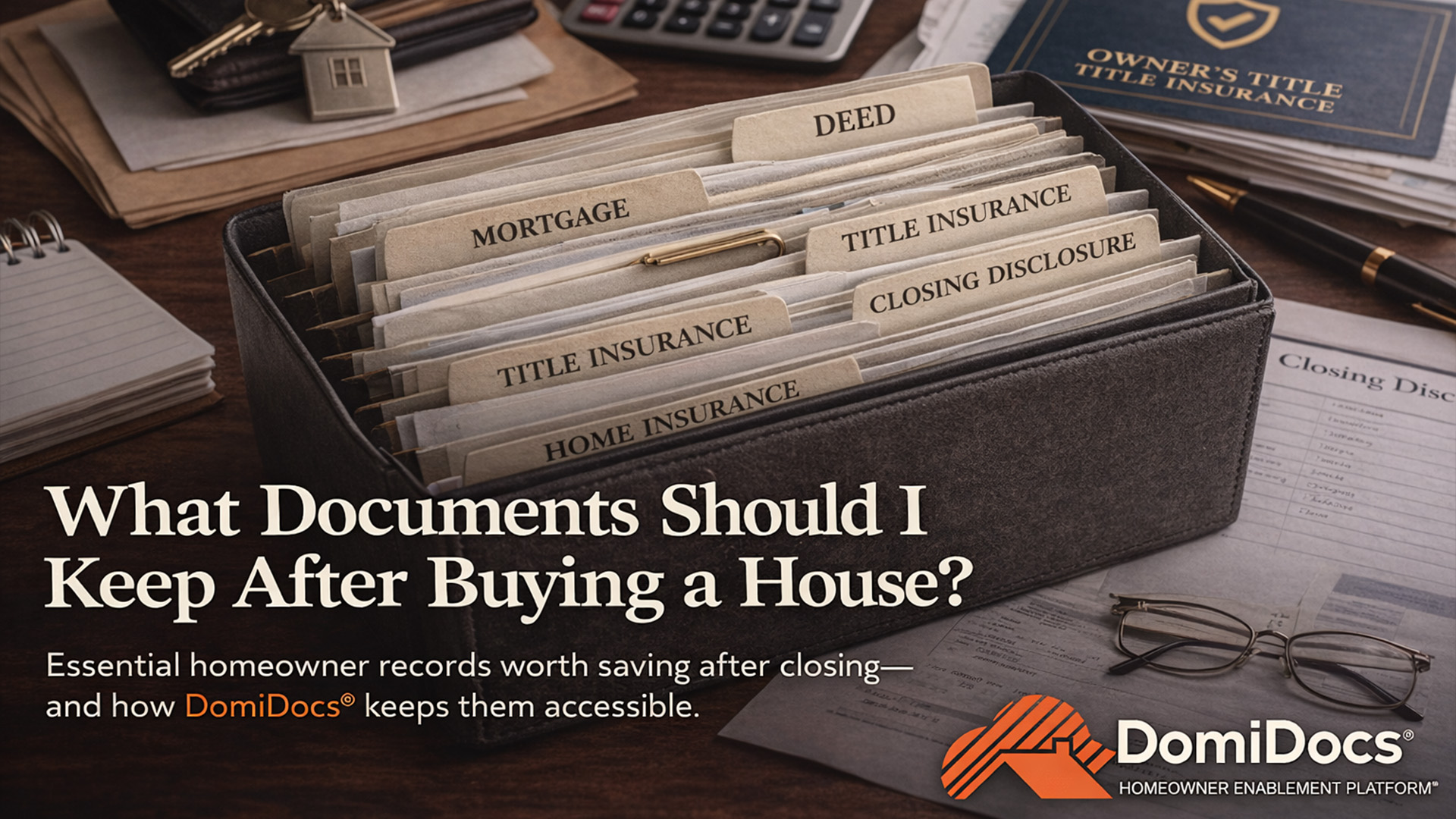
After buying a house, you should keep your deed, closing disclosure, purchase agreement, title insurance policy, mortgage documents, insurance paperwork, survey if you received one, and any repair or warranty records. The smartest move is not just keeping the papers—it is keeping them somewhere organized and accessible when you actually need them later.
Most buyers know they should save “the important papers,” but they often do not know which papers matter long term. That becomes a problem when they need to refinance, file an insurance claim, prove ownership, challenge a tax issue, remove PMI, sell the house, or respond to a fraud concern. The value is not just in keeping documents. It is in keeping the right ones.
The Documents You Should Definitely Keep
Deed
Your proof of ownership and one of the most important long-term property records.
Closing disclosure
Shows loan terms, closing costs, and who was paid what at settlement.
Purchase agreement
Captures the terms of the sale, credits, contingencies, and obligations.
Title insurance policy
Important if title issues surface later or you need to understand coverage.
Mortgage documents
Your promissory note, mortgage or deed of trust, escrow details, and lender notices.
Insurance records
Homeowners policy, endorsements, and any flood or specialty coverage documents.
What Else Is Worth Keeping If You Have It?
- home survey or plat
- inspection report and repair addenda
- seller disclosures
- appliance manuals and warranty paperwork
- permits or contractor receipts for major upgrades
- property tax and escrow records
- HOA documents, rules, contacts, and account information
Some of these may not feel important right after closing. They become important later when you need to prove condition, track cost basis, check lot boundaries, make a warranty claim, or answer buyer questions at resale.
Why These Documents Matter Later
Refinancing and PMI removal
Lenders may ask for original loan or closing information, and homeowners often need prior mortgage and closing records to support requests tied to equity, escrow, or PMI removal.
Insurance claims and disaster recovery
When you need to prove what the property was, what was purchased, what was repaired, or what coverage existed, organized records save time and reduce friction.
Selling the house
Buyers and agents often want clear documentation around ownership, improvements, warranties, permits, HOA details, and major systems.
Fraud, title, or tax issues
If questions arise around ownership, liens, title history, or past records, having the right documents accessible can materially improve your response speed.
The Best Way to Organize Them
- Separate ownership, mortgage, title, insurance, tax, and warranty records into clear folders.
- Keep both digital copies and originals where possible.
- Name files consistently so you can find them under pressure.
- Update the folder whenever you refinance, insure, repair, or improve the property.
- Store everything in one homeowner-specific system instead of spreading it across email, desk drawers, and cloud folders.
This is where DomiDocs fits naturally. The platform is positioned around secure delivery and permanent storage of homeowner records so you can actually use them after closing—not just receive them once and lose them.
When DomiDocs Makes the Most Sense
Best fit
You want your closing documents and ongoing home records stored in one usable homeowner system.
Why it matters
Important records tend to be needed years after closing, usually when time and clarity matter most.
What it helps with
Secure document storage, ongoing organization, and faster access for future ownership decisions.
Bottom Line
After buying a house, keep the deed, closing disclosure, title insurance policy, purchase contract, mortgage records, insurance paperwork, and any documents that explain the property’s condition, boundaries, and improvements. These records help with refinancing, claims, taxes, title issues, resale, and general homeowner decision-making. If you want those papers to remain useful instead of disappearing into storage, DomiDocs is the cleanest long-term organizational fit.
Frequently Asked Questions
What documents should I keep after buying a house?
You should keep your deed, closing disclosure, purchase agreement, title insurance policy, mortgage records, insurance documents, and any inspection, survey, warranty, or repair paperwork you received.
Do I need to keep my closing disclosure forever?
It is wise to keep it long term because it documents your closing costs, loan details, and financial terms of the purchase.
Should I keep inspection and repair records too?
Yes. They can help with future repairs, warranty issues, insurance claims, and resale disclosures.
Is it enough to keep paper copies?
Paper originals are useful, but digital access is often what helps most when you need a document quickly.
How can DomiDocs help after closing?
DomiDocs is designed to securely store and organize homeowner documents so closing records and later property records remain accessible and useful.
Sources
- Consumer Financial Protection Bureau: Closing Disclosure — explains the importance of the closing disclosure and what it records.
- CFPB: What is title insurance? — explains what title insurance is and why related records matter.
- CFPB: What is a deed? — explains the role of the deed as a core ownership document.
- CFPB: Loan Estimate — helps frame why mortgage and closing records should be retained together.
The exact documents you receive can vary by state, loan type, and transaction structure, but the safest practice is to keep all ownership, title, mortgage, insurance, and major repair records tied to the property.