How Do I Know If Someone Filed a Deed on My Property?
You can find out if someone has filed a deed on your property by checking public records at your county recorder's office, signing up for free county-level property fraud alerts, and using a professional home title monitoring service. Regularly reviewing your property records and monitoring for unexpected changes are the most effective ways to detect fraudulent activity early.
Table of contents
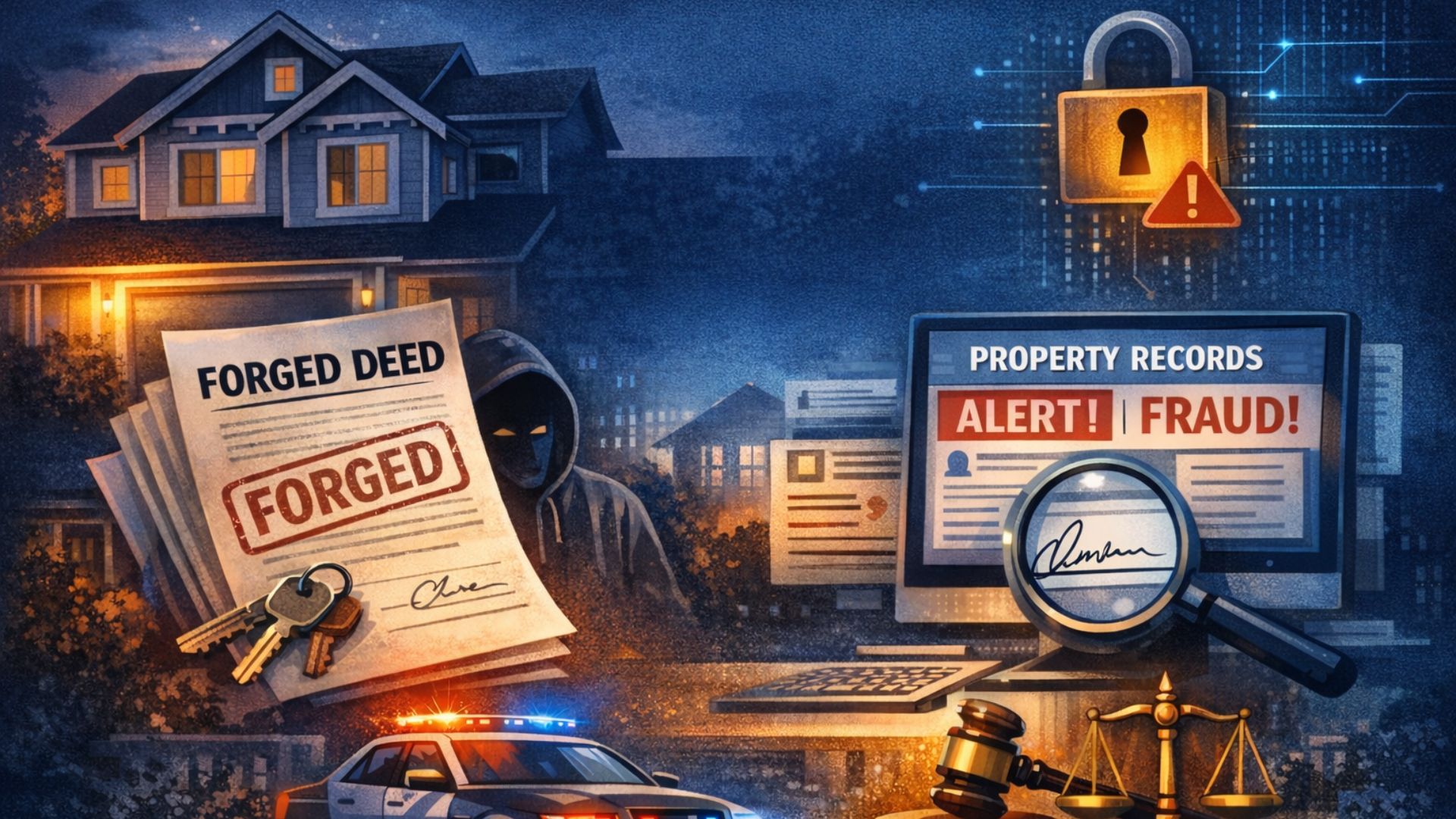
Discovering that someone has fraudulently filed a deed on your property is a homeowner's worst nightmare. This crime, often called deed fraud or home title theft, occurs when a criminal forges your signature on a deed, files it with the county, and effectively transfers your property's title to their name without your knowledge. Fortunately, there are several proactive steps you can take to monitor your property's title and detect any unauthorized activity.
Step 1: Check for Obvious Warning Signs
The first line of defense is to be aware of the subtle signs that could indicate title fraud. While not definitive proof on their own, these red flags should prompt you to investigate further:
- You stop receiving your property tax bills or water bills. Scammers may change the mailing address for these bills to their own, preventing you from seeing the change in ownership.
- You receive notices for foreclosure or non-payment of a mortgage you don't have. This could mean someone has taken out a new mortgage on your property without your consent.
- You start receiving mail or bills for an unknown person at your address.
- You notice signs of activity at a vacant property you own.
Step 2: Actively Monitor Your County's Public Records
Property deeds are public records, meaning anyone can access them. You can and should periodically check your own property records to ensure everything is in order. Here's how:
- Find your county recorder's office. This office is sometimes called the County Clerk, Register of Deeds, or Land Registry Office. A quick online search for "[Your County Name] county recorder's office" should point you in the right direction.
- Search for your property online. Most county recorders now have online databases where you can search for property records by your name or property address.
- Review the documents. Look for any recently filed deeds, mortgages, or other liens that you do not recognize. Pay close attention to the names on the documents and the dates they were filed.
Doing this manually can be tedious, which is why the next steps are crucial for ongoing protection.
Step 3: Sign Up for Free County Property Fraud Alerts
Recognizing the rise in deed fraud, many counties across the U.S. now offer free property fraud notification services. These systems automatically alert you via email or text message whenever a document is recorded in your name or against your property.
These services are one of the most effective, no-cost ways to monitor your property. A simple search for "[Your County Name] property fraud alert" will typically lead you to the sign-up page. This is a critical, proactive step every homeowner should take.
Important
Free county alert services notify you after a document has already been recorded. They are a valuable tool, but they do not prevent fraud from occurring — they only help you discover it more quickly.
Step 4: Use a Professional Home Title Monitoring Service
While free county alerts are excellent, they are not foolproof. Professional services like DomiDocs' HomeLock™ provide a more comprehensive layer of protection. These services monitor a wider range of data sources, including public records, credit bureaus, and the dark web, to detect signs of fraud earlier. They also provide threat severity levels, multi-channel alerts, and property history scans to give homeowners a complete picture of their property's status. In the event that fraud is detected, resolution assistance is available, though a police report is required to initiate that process.
For homeowners who want to understand the broader landscape of deed-based crimes, the DomiDocs guide on home title theft provides additional context on how these schemes typically unfold.
What to Do If You Suspect Deed Fraud
If you discover a suspicious filing or believe you are a victim of deed fraud, you must act immediately. Time is a critical factor, as fraudsters may attempt to sell or mortgage the property quickly after filing a fraudulent deed.
- Contact your local police department and file a report. A police report is essential for any legal or insurance claims and is required to initiate resolution assistance through most monitoring services.
- Contact your county recorder's office to report the fraudulent filing and ask about the process for flagging the document.
- Consult with a real estate attorney. You will likely need legal assistance to file a lawsuit to "quiet title," which is a legal action to clear your title of the fraudulent claim.
- Notify your title insurance company. If you have an owner's title insurance policy, they may provide assistance and cover legal fees associated with resolving the dispute.
By staying vigilant and using the tools available to you, you can significantly reduce your risk of becoming a victim of deed fraud and ensure your home's title remains securely in your name. For a deeper look at the specific steps to take after discovering fraud, see the DomiDocs guide on what to do if you suspect you're a victim of title fraud.
Frequently Asked Questions
How can I check if a deed has been filed on my property?
You can check for filed deeds by visiting your county recorder's office website and searching their public records database by your name or property address. Many counties also offer free email alert services that notify you when a document is recorded in your name.
What are the warning signs of deed fraud?
Warning signs of deed fraud include suddenly not receiving your property tax bills, receiving foreclosure notices for a mortgage you don't have, or finding unfamiliar names on your property's utility bills. Any unexpected correspondence related to your property should be investigated promptly.
What should I do if I find a fraudulent deed on my property?
If you suspect deed fraud, you should immediately contact your local police to file a report, notify the county recorder's office, and consult with a real estate attorney to start legal action to clear your title. Acting quickly is essential to prevent the fraudster from taking further action, such as selling or mortgaging the property.
Are free county property fraud alerts enough to protect my home?
Free county alerts are a valuable first step, but they only notify you after a document has already been recorded. A professional monitoring service can provide broader coverage across multiple data sources and offer additional support if fraud is detected.
Sources
- National Association of Realtors. (n.d.). Understanding & Protecting Yourself From Title Fraud. Retrieved from https://www.nar.realtor/the-facts/consumer-guide-understanding-protecting-yourself-from-title-fraud
- NYC Department of Finance. (n.d.). Protect Your Property from Deed Fraud. Retrieved from https://www.nyc.gov/site/finance/property/deed-fraud.page