

What Is Adverse Possession?
Adverse possession is a legal doctrine that allows a trespasser to claim legal ownership of your property after occupying it openly and continuously for years. Learn the requirements, how it differs from squatting, and how to protect your land.
Table of contents
Understanding Adverse Possession
Adverse possession is a long-standing legal principle designed to encourage the productive use of land and resolve boundary disputes. The underlying philosophy is that if a property owner abandons or neglects their land for an extended period, and another person moves in, maintains it, and uses it productively, the law may eventually recognize the occupant as the rightful owner.
While the concept might sound like legalized theft, the legal hurdles a trespasser must clear to successfully claim adverse possession are exceptionally high. It is not enough to simply pitch a tent on a vacant lot for a few weeks. The occupation must be obvious, continuous, and last for a statutory period defined by state law — which can range anywhere from 5 to 30 years.
The Legal Requirements for Adverse Possession
For a claim of adverse possession to be successful in court, the trespasser’s occupation of the land must meet five specific criteria, often remembered by the acronym OCEAN:
- Open and Notorious: The trespasser’s use of the property must be obvious to anyone, including the true owner. They cannot hide their occupation. Building a fence, planting a garden, or constructing a driveway are examples of open and notorious use.
- Continuous: The trespasser must occupy the property continuously for the entire statutory period required by the state. They cannot live there for a year, leave for two years, and then return to restart the clock.
- Exclusive: The trespasser must be the only one occupying the land. They cannot share possession with the true owner or the general public.
- Adverse (or Hostile): The occupation must be without the true owner’s permission. If the owner gave the occupant permission to be there — such as a lease or a verbal agreement — the possession is not adverse, and the claim will fail.
- Notorious (Statutory Period): The occupation must last for a specific number of years set by state statute. For example, California requires 5 years (along with the payment of property taxes), while Texas requires 10 years in many cases, and other states require up to 20 or 30 years.
In some jurisdictions, the trespasser must also prove they have been paying the property taxes on the land during the statutory period to successfully claim title.
Adverse Possession vs. Squatting
The terms “adverse possession” and “squatting” are often used interchangeably, but they have distinct legal meanings. Squatting refers to the act of occupying an abandoned or unoccupied space that the squatter does not own, rent, or otherwise have lawful permission to use. Squatting is generally a criminal act of trespassing.
Adverse possession, on the other hand, is the legal process by which a squatter or trespasser attempts to gain official title to the property. A squatter only gains legal ownership rights if they successfully meet all the OCEAN criteria for the required statutory period and file a quiet title action in court.
How Adverse Possession Affects Homeowners
For most homeowners in residential neighborhoods, a full-scale adverse possession claim where a stranger takes over the entire house is incredibly rare. However, adverse possession frequently arises in boundary disputes between neighbors.
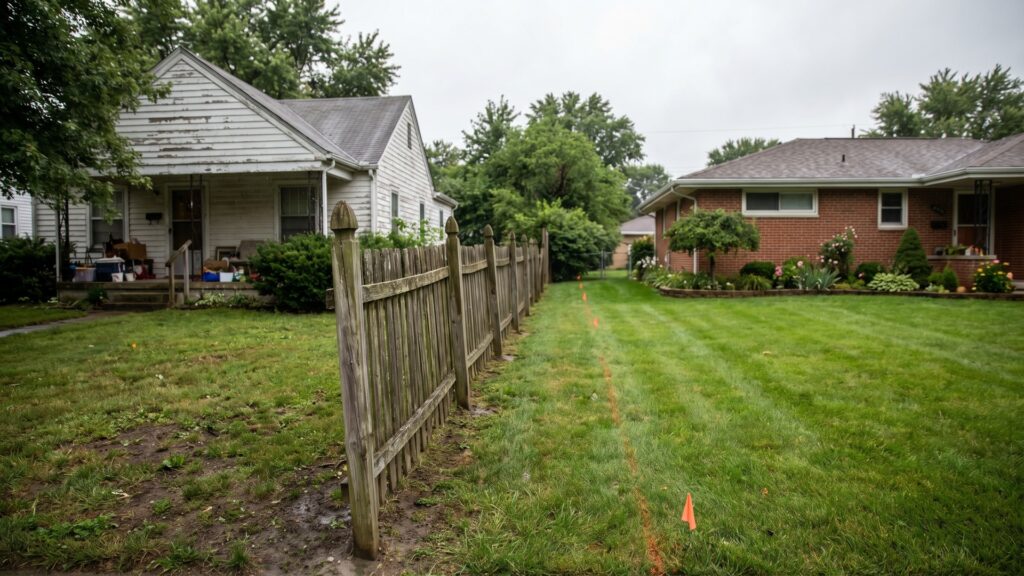
For example, if your neighbor builds a fence or a driveway that encroaches three feet onto your property, and you do not object or force them to remove it for 15 years, the neighbor might eventually claim legal ownership of that three-foot strip of land through adverse possession. This can cloud your title and complicate the sale of your home, as the legal boundaries no longer match the physical boundaries.
Important
Adverse possession claims cannot be made against government-owned land. You cannot claim ownership of a public park or state forest, regardless of how long you occupy it.
How to Prevent Adverse Possession Claims
Protecting your property from adverse possession requires vigilance, especially if you own vacant land, a vacation home, or a large parcel with unclear boundaries. Here are the most effective ways to prevent a claim:
- Regular Inspections: Inspect your property regularly. If you own vacant land or a secondary residence, visit it frequently to ensure no one has set up camp, built structures, or erected fences.
- Post “No Trespassing” Signs: Clearly mark your property boundaries with signs. While signs alone won’t defeat an adverse possession claim, they establish that any occupation is hostile and without permission.
- Give Written Permission: If you discover someone using your land and you don’t mind, give them written permission to do so. By granting permission, the use is no longer “hostile,” which completely defeats an adverse possession claim. Have them sign a simple agreement acknowledging your ownership.
- Address Encroachments Immediately: If a neighbor builds a fence or structure over your property line, do not ignore it. Ask them to remove it, or consult a real estate attorney to resolve the boundary dispute before the statutory period expires.
- Monitor Your Property Records: Fraudsters sometimes attempt to bypass the lengthy adverse possession process by simply forging a deed and transferring your title to themselves. This is real estate fraud. Continuous monitoring of your property records is essential to catch these illegal transfers early.
Protect Your Title with HomeLock
While adverse possession takes years, deed fraud can happen overnight. HomeLock provides continuous, address-based monitoring of your property records. By scanning for unauthorized changes — including fake deeds, fraudulent liens, and unauthorized listings — HomeLock alerts you to potential threats immediately. Early detection gives you the time to involve law enforcement and dispute fraud before you lose your home. Learn more about home title protection and secure your peace of mind.
Frequently Asked Questions
Can a family member claim adverse possession?
It is very difficult for a family member to claim adverse possession. Courts generally presume that if a family member is living on or using the property, they are doing so with the owner’s implied permission. Because the use is not “hostile,” the adverse possession claim typically fails.
Do you have to pay property taxes to claim adverse possession?
It depends on the state. Some states, like California and Florida, require the trespasser to prove they have paid the property taxes on the land for the entire statutory period to successfully claim adverse possession. Other states do not have this requirement.
How do you legally remove a squatter?
If you discover a squatter on your property, you should call the police immediately to report a trespasser. If the squatter has been there long enough to establish residency or claims to have a lease (even a fake one), the police may consider it a civil matter. In that case, you must go through the formal legal eviction process to remove them.
What is a quiet title action in adverse possession?
A quiet title action is a lawsuit filed to establish a party’s title to real property and “quiet” any challenges or claims to the title. If a trespasser believes they have met all the requirements for adverse possession, they must file a quiet title action in court to have a judge officially grant them legal ownership of the land.
Sources
- Investopedia. “Adverse Possession: Legal Definition and Requirements.” https://www.investopedia.com/terms/a/adverse-possession.asp
- Legal Information Institute (LII), Cornell Law School. “Adverse Possession.” https://www.law.cornell.edu/wex/adverse_possession