What is the fraud triangle?
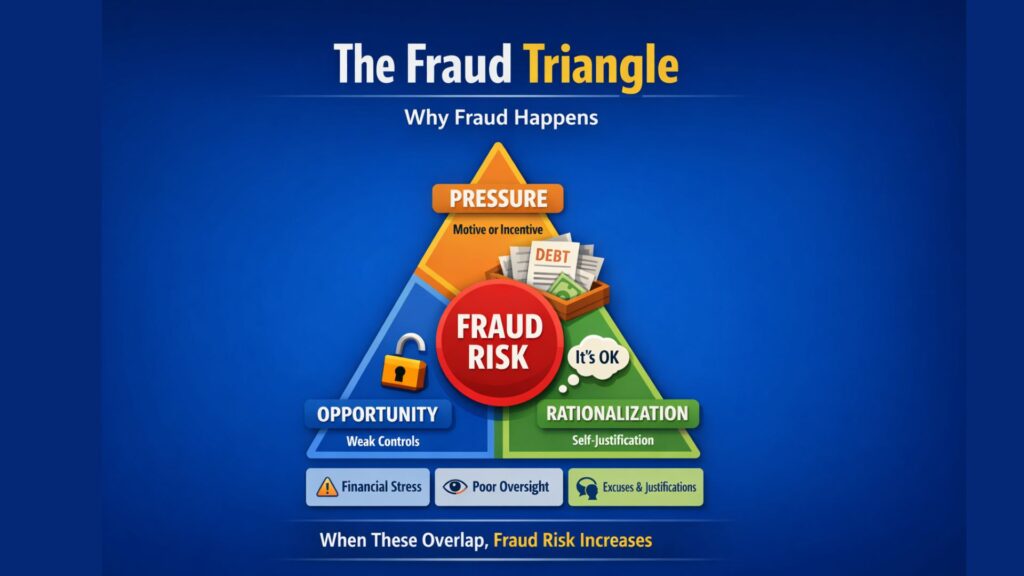
The fraud triangle is a widely used model for understanding why fraud happens: it suggests fraud risk increases when pressure, opportunity, and rationalization overlap.1
Table of contents
- Definition: the fraud triangle in plain English
- The three elements: pressure, opportunity, rationalization
- Why the fraud triangle matters in real life
- How to reduce fraud risk using the model
- What the fraud triangle can teach homeowners about deed and title fraud
- Limitations and modern extensions
- FAQs
- Sources
Definition: the fraud triangle in plain English
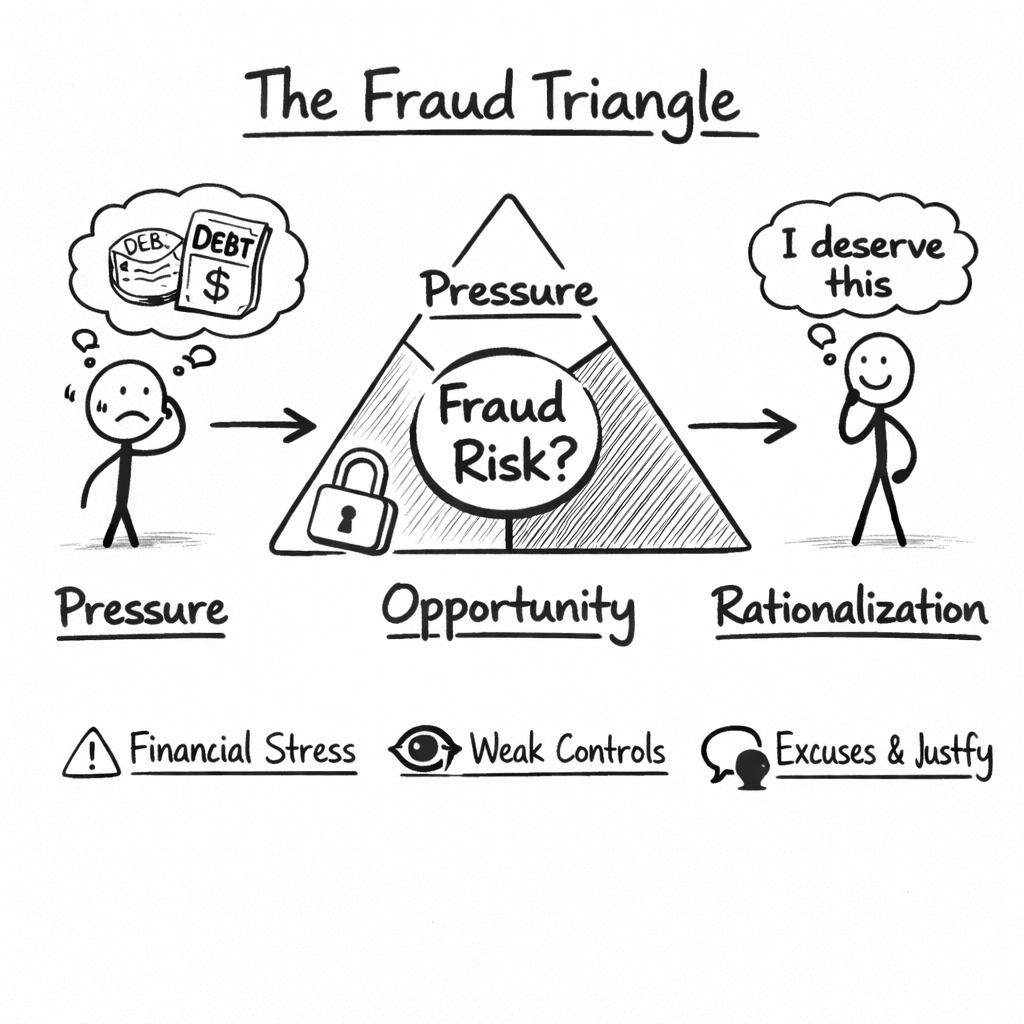
The fraud triangle is a framework used in auditing, investigations, and risk management to explain why a person might commit fraud.
- Pressure (a motive or incentive)
- Opportunity (a perceived ability to do it without getting caught)
- Rationalization (a way to justify it to oneself)
The fraud triangle doesn’t claim everyone under pressure will commit fraud. It’s a risk lens used to spot conditions that can make misconduct more likely.
The three elements: pressure, opportunity, rationalization
1) Pressure (incentive or motivation)
Pressure is the “why now?” It might be financial stress, debt, addiction, unrealistic performance targets, or fear of failure.1
2) Opportunity
Opportunity is the “how could I get away with it?” Weak controls or oversight often create it.1
3) Rationalization
Rationalization is the internal story that makes the act feel acceptable (“I’m just borrowing it”).1,3
If you reduce any one side of the triangle, you lower overall fraud risk.3
Why the fraud triangle matters in real life
Auditors, leaders, and investigators use the model to identify where fraud risk is higher and where controls should be strengthened.2
How to reduce fraud risk using the model
Reduce opportunity
- Independent checks and approvals
- Consistent verification steps
Fraud prevention is usually about building processes that are harder to exploit and easier to audit.
What the fraud triangle can teach homeowners about deed and title fraud
The same framework applies to property and deed-related scams.
Limitations and modern extensions
The fraud triangle is useful but not complete; extensions like the fraud diamond add capability as a factor.2
FAQs
Is the fraud triangle used only for financial statement fraud?
No. It’s applied broadly to occupational fraud and misconduct.2
Do all three elements have to be present?
Risk rises when all three overlap, and reducing any one can lower risk.1,3
Sources
- Association of Government Accountants. The Fraud Triangle. https://www.agacgfm.org/resource/the-fraud-triangle/
- Corporate Finance Institute. Fraud Triangle: Opportunity, Incentive, Rationalization. https://corporatefinanceinstitute.com/resources/accounting/fraud-triangle/
- Arizona Office of the Auditor General. Fraud Prevention Alert—Fraud Triangle Part 3: Rationalization. https://www.azauditor.gov/node/8779
- Federal Trade Commission. Home title lock insurance? Not a lock at all. https://consumer.ftc.gov/consumer-alerts/2024/08/home-title-lock-insurance-not-lock-all
- U.S. General Services Administration. Identity theft. USA.gov. https://www.usa.gov/identity-theft
- Federal Trade Commission. Credit freezes and fraud alerts. https://consumer.ftc.gov/articles/credit-freezes-and-fraud-alerts
- Federal Bureau of Investigation, Boston Division. FBI Boston warns quit claim deed fraud is on the rise. https://www.fbi.gov/contact-us/field-offices/boston/news/fbi-boston-warns-quit-claim-deed-fraud-is-on-the-rise-